WORLD NEWS
Abdul El-Sayed Makes History as First Muslim Elected to US Senate

Abdul El-Sayed Makes History as First Muslim Elected to US Senate
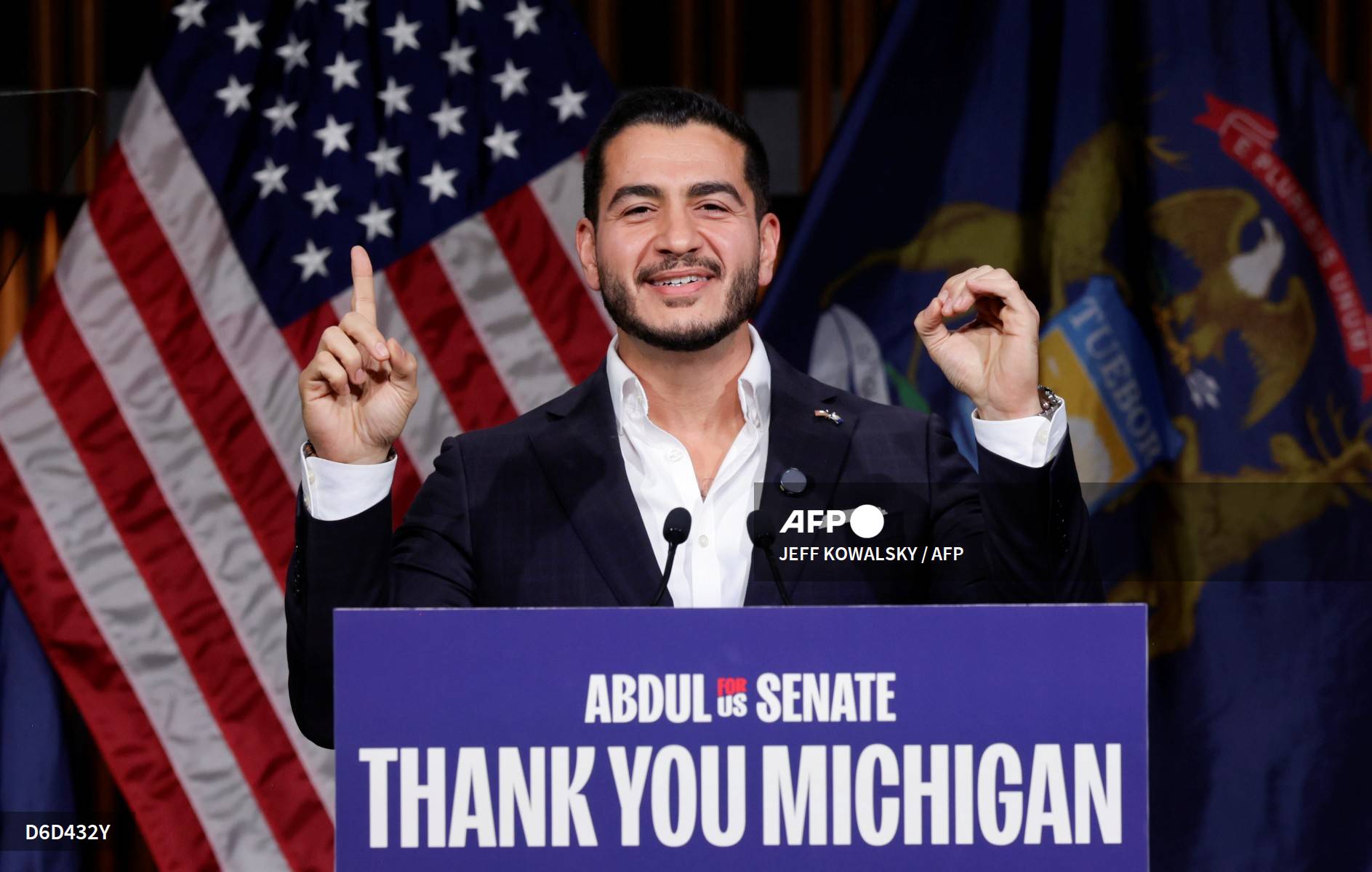
Democratic candidate Abdul El-Sayed has made history in the United States after defeating Republican challenger Mike Rogers in Michigan’s Senate election, becoming the first Muslim elected to the US Senate.
El-Sayed’s victory in the November 3, 2026 midterm elections was projected by major American media organisations, including the Associated Press, following a closely contested race that attracted national attention.
The 42-year-old Democrat will succeed retiring Senator Gary Peters, preserving the seat for the Democratic Party and delivering a significant victory to its progressive wing.
Born in Michigan to Egyptian immigrant parents, El-Sayed is a physician, epidemiologist and former public health administrator whose political campaign centred on healthcare reform, the rising cost of living and reducing the influence of wealthy donors and corporations in American politics.
His election represents a historic breakthrough for Muslim representation in the United States Congress, where no Muslim had previously been elected to the Senate.
Healthcare and economic reform at the centre of campaign
Throughout the campaign, El-Sayed presented himself as a candidate focused on the economic pressures confronting ordinary American families.
His policy proposals included Medicare for All, a government-funded universal healthcare programme, alongside measures to tackle corporate influence in politics and reduce the financial burden on working households.
He also advocated reforms to campaign financing, arguing that wealthy individuals and corporate interests exert excessive influence over public policy.
ALSO READ : Four Nigerian-Americans Win in US Midterm Elections, Full List of Winners
The campaign attracted support from prominent figures within the Democratic Party’s progressive movement, including politicians and activists who viewed his candidacy as an opportunity to advance a more populist economic agenda.
El-Sayed’s victory is expected to strengthen the influence of progressive Democrats in Washington, particularly as the party continues to debate its political direction and approach to national elections.
Muslim identity becomes major campaign controversy
Beyond economic policy, El-Sayed’s religious identity became one of the most contentious issues during the election campaign.
Republican figures, including President Donald Trump and his allies, repeatedly attacked his Muslim background and questioned his loyalty to the United States.
He also faced allegations linking him to the Muslim Brotherhood, which he denied. Reports on the election campaign said the allegations were not supported by evidence.
His positions on Israel and the war in Gaza also generated intense debate. El-Sayed opposed American military assistance to Israel and described its actions in Gaza as genocide, positions that attracted support from some progressive voters but drew criticism from other sections of the electorate.
The campaign became increasingly personal, with discussions about his faith and foreign policy views sometimes overshadowing the economic issues he sought to emphasise.
His victory nevertheless demonstrated that he could secure support in a politically competitive state despite the controversy surrounding his identity and positions.
Defeats former congressman Mike Rogers
El-Sayed defeated Republican Mike Rogers, a former seven-term member of the US House of Representatives, former FBI agent and former chairman of the House Intelligence Committee.
Rogers entered the contest with substantial backing from President Trump and national Republican figures, seeking to capture the seat left vacant by Peters’ retirement.
The Republican candidate campaigned on tax relief, manufacturing jobs and economic policies, while attempting to portray El-Sayed’s progressive positions as unsuitable for Michigan.
However, concerns about living costs, the economy and the Trump administration’s policies became important issues in the closing stages of the campaign.
The contest also witnessed divisions within the Democratic Party. Representative Haley Stevens, whom El-Sayed defeated in the Democratic primary, endorsed Rogers shortly before Election Day, creating further controversy among Democratic supporters.
Despite the divisions and political attacks, El-Sayed emerged victorious.
From public health administration to the US Senate
Before entering electoral politics, El-Sayed built his career in medicine and public health.
He previously served as executive director of the Detroit Health Department and as director of the Wayne County Department of Health, Human and Veterans Services.
His public health experience helped shape his political identity, particularly his emphasis on universal healthcare, public services and addressing inequalities affecting working-class communities.
He first attracted national political attention in 2018 when he unsuccessfully contested the Michigan governorship.
Eight years later, his victory in the Senate election marks a dramatic political turnaround and places him among the most prominent progressive voices in the Democratic Party.
With his election, El-Sayed is set to enter a chamber where debates over healthcare, immigration, economic policy, foreign affairs and the future of American democracy remain central.
His historic victory has also opened a new chapter in the representation of religious minorities in American national politics.